We recognise that Mathematics is a critical area of skill and knowledge that impacts on the quality and value of the lives we lead. At Sapperton we:
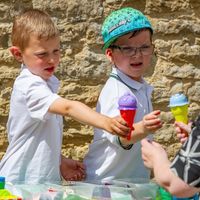
Promote enjoyment through practical activity, exploration and discussion;
Develop confidence and competence with numbers and the number system;
Develop the ability to solve problems through decision-making and reasoning in a range of contexts;
Develop a practical understanding in the ways in which information is gathered and presented;
Explore features of shape and space, and developing measuring skills in a range of contexts;
Help children understand the important of mathematics in everyday life.
Curriculum Intent
Our Christian vision is embedded thoroughly in our school life and the learning that is contained therein. In mathematics, we nurture children’s faith in themselves, each other and in the curriculum we deliver, and inspire success through carefully planned and assessed mathematical concepts matched to the national curriculum expectations from EYFS to Year 6.
Our curriculum aims for all children to:
become fluent in the fundamentals of mathematics. This will allow children time to practise the skills increasing their conceptual understanding. It gives children time to be secure in a skill and their understanding so they can recall it instantly and apply the knowledge rapidly and accurately.
reason mathematics by using mathematical language and understanding of concepts that can be justified with proof, generalised or relationships explained.
solve problems by applying the mathematics they already know with increasing complexity, breaking down problems into a series of simpler steps and persevering with finding solutions.
Pupils are encouraged to take responsibility for their learning and to become the best version of themselves by approaching it with resilience and positivity. The teaching of mathematics supports the social and emotional development of our children through the way we expect them to work with each other, think independently and think critically. We use these transferable skills across many other areas of our curriculum. Children develop oracy skills through discussion over concepts and we prioritise the acquisition of new vocabulary. We teach mathematics with the aim of children being able to articulate what being a mathematician involves: spotting patterns, solving problems, using what they already know, finding efficient methods and working systematically.
Curriculum Implementation
We build knowledge and skills through an engaging and inclusive curriculum; finding ways to make the learning stick and using real life examples to make the mathematics meaningful. The engaging curriculum is achieved through carefully planned and sequenced lessons, based on small steps for particular year groups, which are adapted and developed to support pupils with SEND. We have high expectations for all and foster a belief that, with well-planned adaptations to our teaching, (such as the use of manipulatives or adult support) our inclusive curriculum allows for all children to be successful in their learning. Lessons are carefully designed so that pupils:
- develop fluency through regular practice;
- reason mathematically using precise mathematical language;
- solve increasingly complex problems;
- make connections between different mathematical concepts;
- explain, justify and prove their thinking;
- develop resilience when faced with challenge
We build fluency in number during every maths lesson. In EYFS, children develop confidence with number through high-quality provision that encourages mathematical talk through play, alongside daily explicit teaching activities. From Year 1 to Year 6, children take part in a daily ‘Lucky 13’ activity, which supports the recall of foundational knowledge such as number bonds.
Our curriculum is broken down into small, carefully sequenced steps to help embed new learning effectively. In each session, children practise new skills, develop mathematical vocabulary and oracy through reasoning, and apply their understanding through increasingly complex problem-solving activities. We refer to these stages as ‘Do It’, ‘Secure It’ and ‘Deepen It’. Through carefully planned adaptations and support, all children are enabled to access and succeed in all three levels of learning.
We use the White Rose curriculum as the foundation of our mathematics curriculum. This is enhanced through a range of additional teaching resources and opportunities, including our daily ‘Lucky 13’ fluency activities and ‘Problem of the Day’ challenges, which support children in developing confidence, fluency and resilience in mathematics.
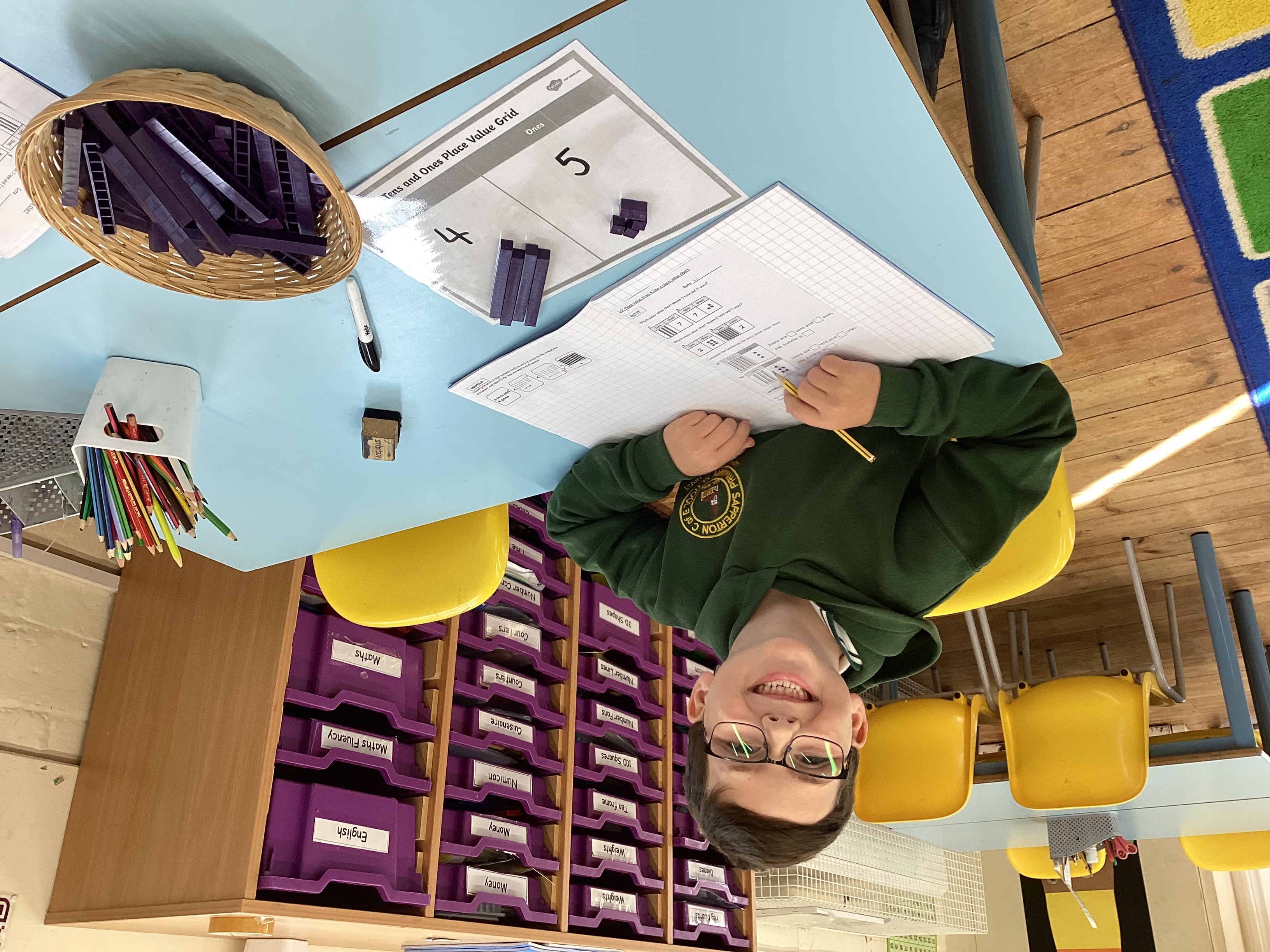
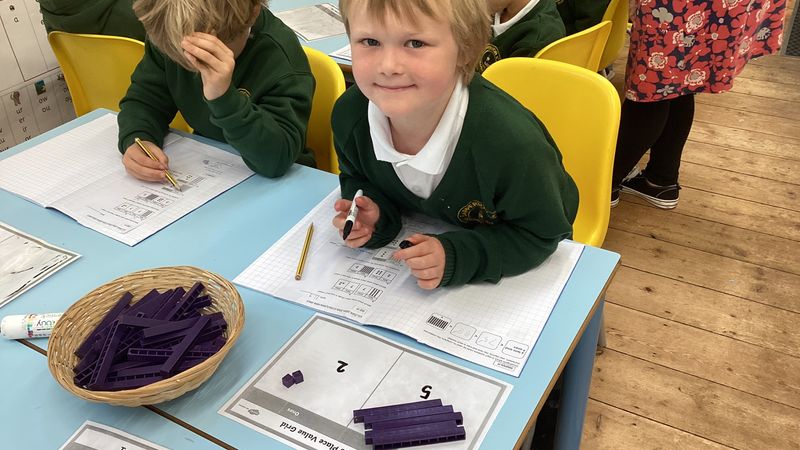
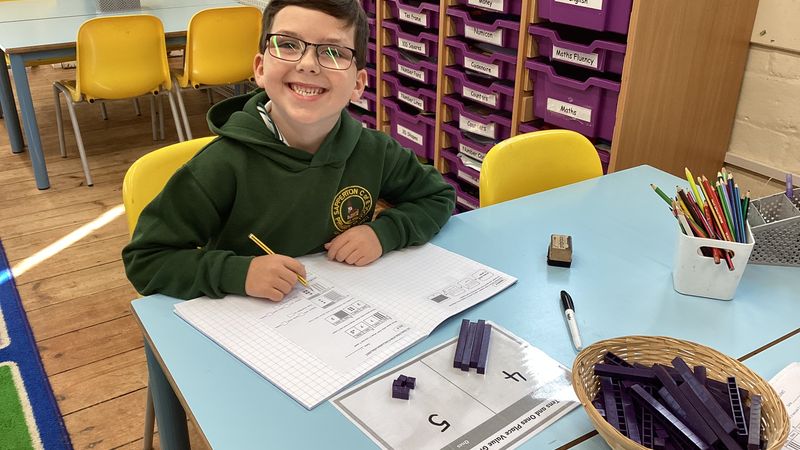
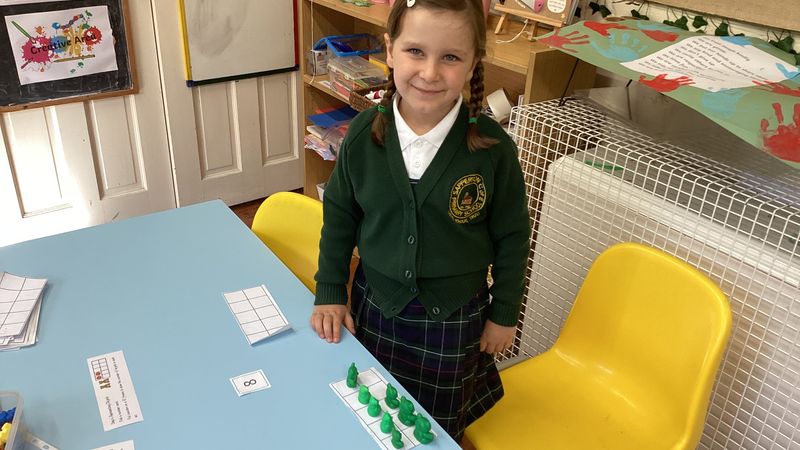
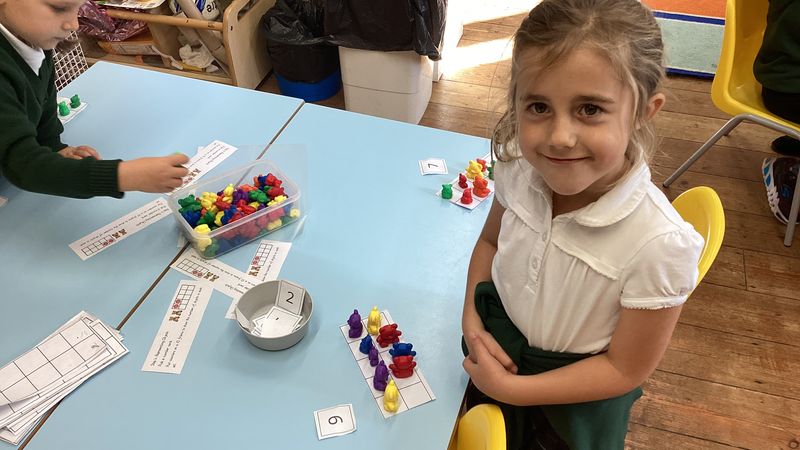
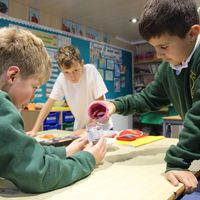
Children first explore mathematical ideas using practical equipment and manipulatives. These experiences enable children to build secure mental images. Children then represent their understanding through diagrams and images before recording calculations abstractly. These representations help pupils make connections between practical experiences and abstract calculation. Challenge is achieved through greater depth of understanding, rich reasoning opportunities and increasingly sophisticated problem solving.
Manipulatives and pictorial representations used across school include:
- Base Ten (Dienes)
- Place Value Counters
- Numicon
- Rekenreks
- Tens Frames
- Cuisenaire Rods
- Double-sided Counters
- Bead Strings
- Number Lines
- Part-Whole Models
- Fraction Walls
- Bar Models
- Area models
- Number lines
- Arrays
Mathematical Vocabulary
At Sapperton, we recognise that language is fundamental to successful mathematical learning.
Teachers explicitly teach mathematical vocabulary and model the correct use of mathematical language throughout every lesson. Pupils are encouraged to use full mathematical sentences when explaining their thinking. Vocabulary is progressively developed from Nursery to Year 6 and revisited regularly to strengthen understanding.
Fluency
Fluency is developed through carefully planned opportunities to revisit and apply previously taught learning through the 'Lucky 13' and when building new concepts through the small steps. Daily retrieval practice and regular review ensure that knowledge is retained within long-term memory.
Children regularly practise:
- number facts;
- number bonds;
- multiplication tables;
- mental calculation strategies;
- efficient written methods;
- mathematical vocabulary.
Reasoning
Reasoning opportunities are embedded within every lesson. Teachers use carefully chosen questions to promote discussion and deepen understanding. Children are encouraged to:
- explain their thinking;
- justify their methods;
- compare different strategies;
- identify patterns;
- prove or disprove statements;
- spot mistakes;
- convince others using mathematical evidence.
Problem Solving
Problem solving is central to mathematics at Sapperton. Problems are presented in meaningful contexts to help pupils understand the relevance of mathematics in everyday life. Children regularly encounter problems that require them to:
- apply previously taught knowledge;
- select efficient strategies;
- make decisions independently;
- work systematically;
- persevere when solutions are not immediately apparent;
- evaluate the reasonableness of answers.
Adaptive Teaching
Teachers adapt learning to ensure that every child experiences success whilst maintaining high expectations for all. Children requiring additional support receive timely intervention, while pupils demonstrating secure understanding are challenged through reasoning and deeper mathematical thinking rather than acceleration to new curriculum content. Adaptive teaching may include:
- carefully selected manipulatives;
- pre-teaching key vocabulary;
- additional scaffolds;
- worked examples;
- guided practice;
- targeted questioning;
- flexible grouping;
- opportunities for overlearning where appropriate.
Assessment for Learning
Assessment is integral to everyday teaching. Assessment informs future planning and ensures misconceptions are identified and addressed promptly. Teachers continually assess pupils through:
- questioning;
- observation;
- discussion;
- pupil explanations;
- independent work;
- retrieval activities;
- low-stakes quizzes;
- NFER assessments.
Learning Environment
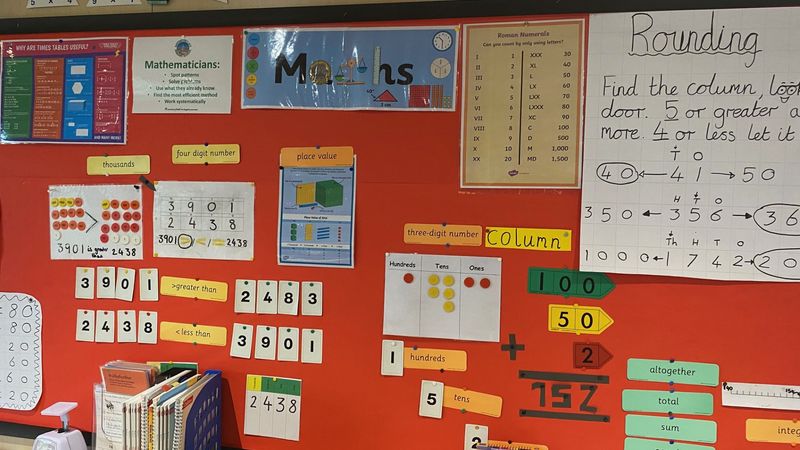
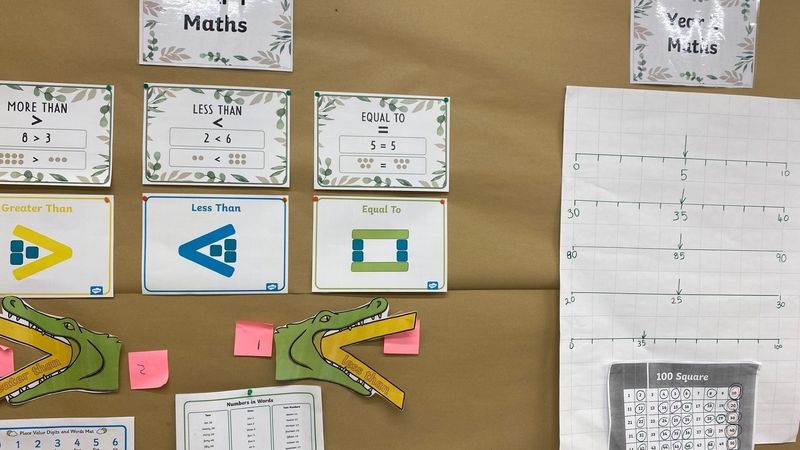
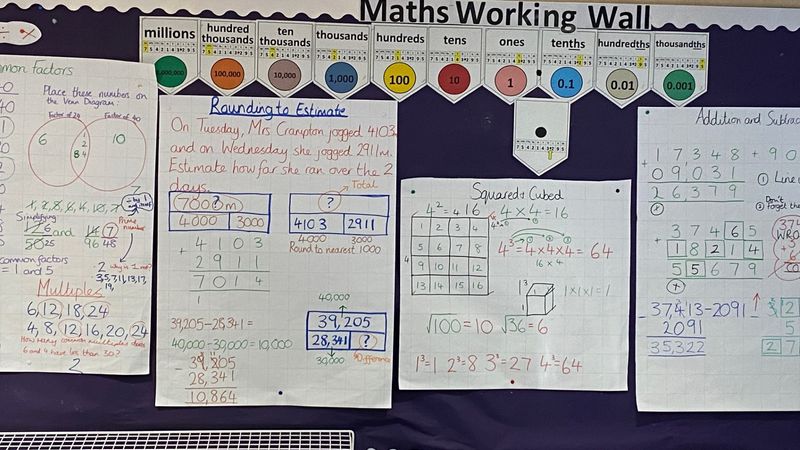
Mathematics classrooms provide an engaging environment that supports learning. Resources are accessible to encourage independence and support children in selecting appropriate representations. Working walls are purposeful and include:
- key vocabulary;
- stem sentences;
- representations;
- worked examples;
- manipulatives;
- current learning;
- examples of children's reasoning.


-2-200x200.jpg)